Every Room and Outbuilding Cleared in One Process
Estate cleanout service in Fredericksburg for properties holding decades of accumulated belongings across multiple structures after a death or property transfer
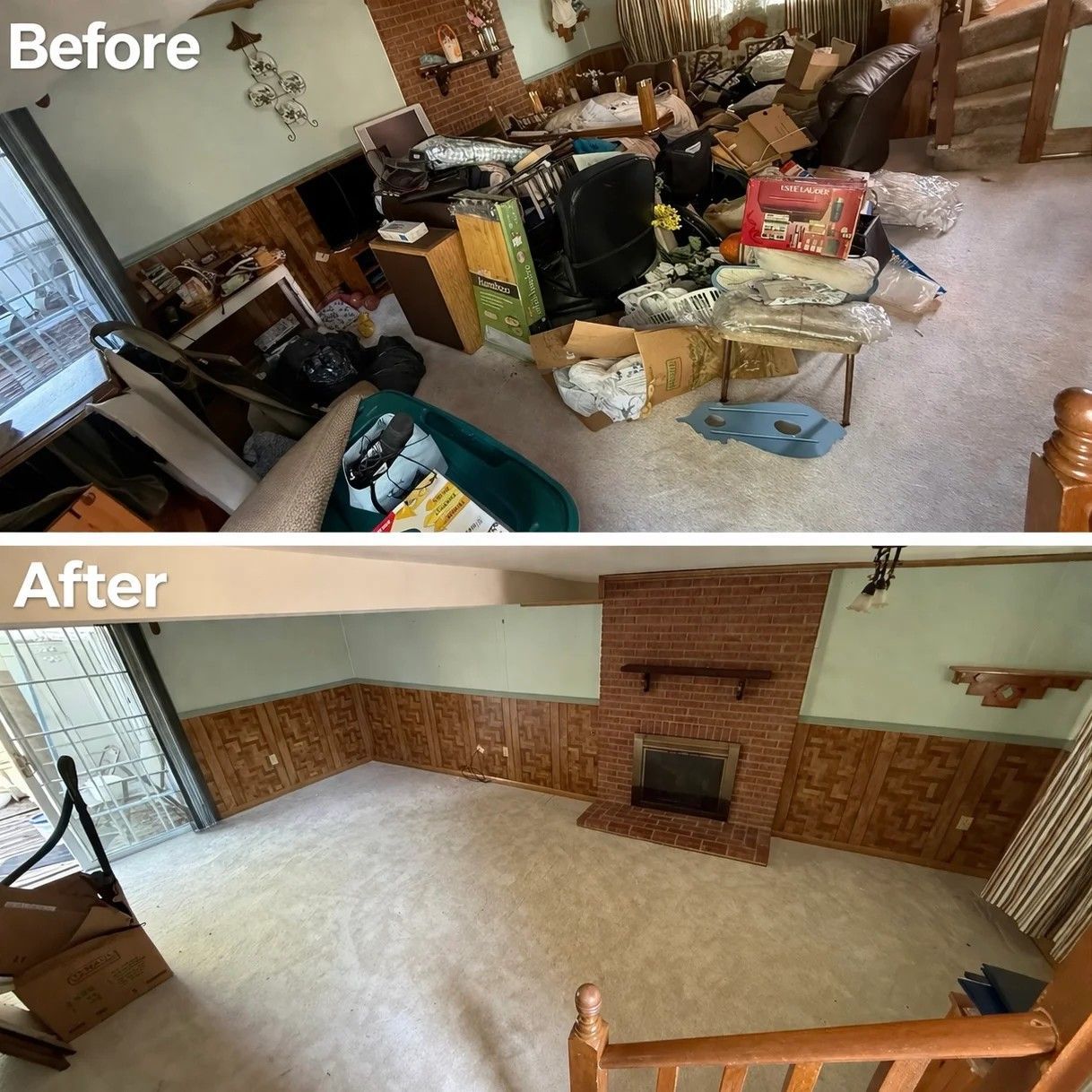
Rural properties throughout the Fredericksburg area present a specific estate cleanout challenge: the accumulation is rarely limited to the main house. Outbuildings, detached garages, storage sheds, and secondary structures on older rural properties hold decades of material—tools, equipment, furniture, and family items that spread across multiple spaces rather than sitting in one accessible location. Anderson Removal LLC handles estate cleanouts as an owner-operated service, clearing the full interior of every structure on the property in a single coordinated process so that families managing a property after a death or preparing for a transfer do not have to coordinate multiple vendors or return visits.
The process covers every room, including attic and basement spaces, along with any outbuildings on the property. Items are sorted during removal for donation or recycling where possible, keeping usable belongings out of the landfill rather than treating everything as disposal. The owner personally manages all work and maintains direct communication with the client throughout, which matters when families are navigating a property transfer while also managing the circumstances surrounding the loss of the person who lived there.
Request an on-site review of the property to confirm the scope across all structures before the cleanout begins.
Why Estate Cleanouts Require a Different Approach Than Standard Removal
An estate cleanout differs from a house cleanout in scope and in the decisions made during removal. Standard removal is largely about volume and logistics. Estate cleanouts involve an additional layer of judgment: identifying which items have reuse or donation potential, which should be separated for family review before disposal, and which need to go directly to disposal facilities. That sorting happens during the loading process, not as a separate phase, which is why the owner being on-site for every job matters. Items that could go to a charitable organization require a different handling sequence than items going to disposal, and those decisions cannot be delegated to crew members working without direct client contact.
When the cleanout is complete, what remains is a property cleared from every structure—main house, garage, outbuildings, and storage areas—with no items left behind in crawl spaces, under stairwells, or in secondary structures that were not part of the initial walkthrough. In Aquia Harbor and Garrisonville, where established properties sit on larger lots with multiple outbuildings, a thorough clearance often requires accessing structures that are not immediately visible from the main entrance. Anderson Removal LLC accounts for the full property footprint, not just the main living space.
The service leaves the property ready for its next step—whether that is listing with an agent, transferring to a new owner, or completing required inspections. It does not include appraisal of items, legal handling of the estate, or removal of materials requiring hazardous waste disposal, such as old paint, refrigerant-containing appliances, or pesticides. Those materials need to be identified before the cleanout begins so they can be handled through the appropriate disposal channel.
Common Questions About How Estate Cleanout Work Is Done
Families managing an estate in Fredericksburg often have questions about how the process handles both the logistics of removal and the careful treatment of belongings that carry personal or financial significance.
How does the process handle items that may have donation or resale value?
During loading, the owner separates items that are in usable condition and routes them toward donation or recycling channels rather than disposal. Families who want specific items reviewed before removal is complete should identify those items or areas before the cleanout begins so nothing moves before it has been seen.
What is the correct sequence for clearing a property with both a main house and multiple outbuildings?
Typically, the main living areas are assessed and cleared first to establish the baseline volume and identify any items requiring special handling, then outbuildings are worked through systematically. This sequencing prevents items from being moved between structures mid-process, which adds handling time without adding efficiency.
How should a family prepare a Fredericksburg estate property for the cleanout?
Walk through the property before the appointment and identify anything that should not be removed—items earmarked for family members, documents that need to stay on-site, or heirlooms requiring separate handling. Mark those items clearly or move them to a designated area. No other sorting is required before the owner arrives.
What does responsible disposal mean in the context of an estate cleanout?
Items that can be donated go to charitable organizations rather than the landfill. Items suitable for recycling are separated from general disposal. What remains is disposed of at licensed facilities. The intent is to keep usable material in circulation rather than treating all estate contents as waste by default.
Why does the scope of older rural properties in Fredericksburg affect how estate cleanouts are planned?
Properties built several decades ago often include secondary structures—detached garages, pump houses, storage buildings—that accumulated contents independently of the main house. A thorough cleanout requires accounting for all of those spaces, not just the main living area, which changes the volume estimate and the time required to complete the work.
Anderson Removal LLC also provides estate cleanouts in Stafford, Chancellor, Thornburg, Falmouth, and Hartwood. To discuss the property and what the cleanout scope will involve, call Anderson Removal LLC at (540) 300-7330.