Structures Torn Down and the Yard Left Clear
Shed demolition in Fredericksburg for rotting, structurally failed, or no-longer-used outbuildings on residential and rural properties
Rural properties and established residential lots throughout Fredericksburg commonly hold sheds built decades ago from materials that were never intended to last indefinitely—rough-sawn lumber, corrugated metal panels fastened with mismatched hardware, and poured concrete pads that have heaved or cracked over time. When those structures reach the end of their service life, they create two distinct problems: a visual one, because a collapsed or visibly rotting outbuilding affects the character of the property, and a practical one, because the footprint of a failed shed blocks yard use that would otherwise be available. Anderson Removal LLC handles shed demolition in Fredericksburg with the owner personally managing every job and the property left completely clear when the work is done.
The demolition process covers the full structure in a single visit—walls, roof, framing, flooring, metal panels where applicable, and all fasteners and hardware. Nothing is left staged for a separate haul or sorted into piles for the customer to manage. Older sheds in neighborhoods like Locust Grove and Thornburg frequently have mixed construction—wood framing combined with metal roofing or concrete block walls—and the owner accounts for those combinations when sequencing the teardown rather than treating every structure as identical.
Contact Anderson Removal to walk through the structure's condition and confirm what the demolition and clearing will cover before work begins.
What Shed Demolition Actually Accomplishes
Shed teardown done correctly involves more than pulling boards off a frame. The sequence matters: roof sections are addressed before wall framing is destabilized, and wall panels are removed in an order that prevents the structure from collapsing outward rather than inward. This sequencing is particularly relevant for sheds with compromised framing where individual members may no longer carry load predictably. The owner evaluates structural condition before the first component is removed and adjusts the teardown sequence accordingly.
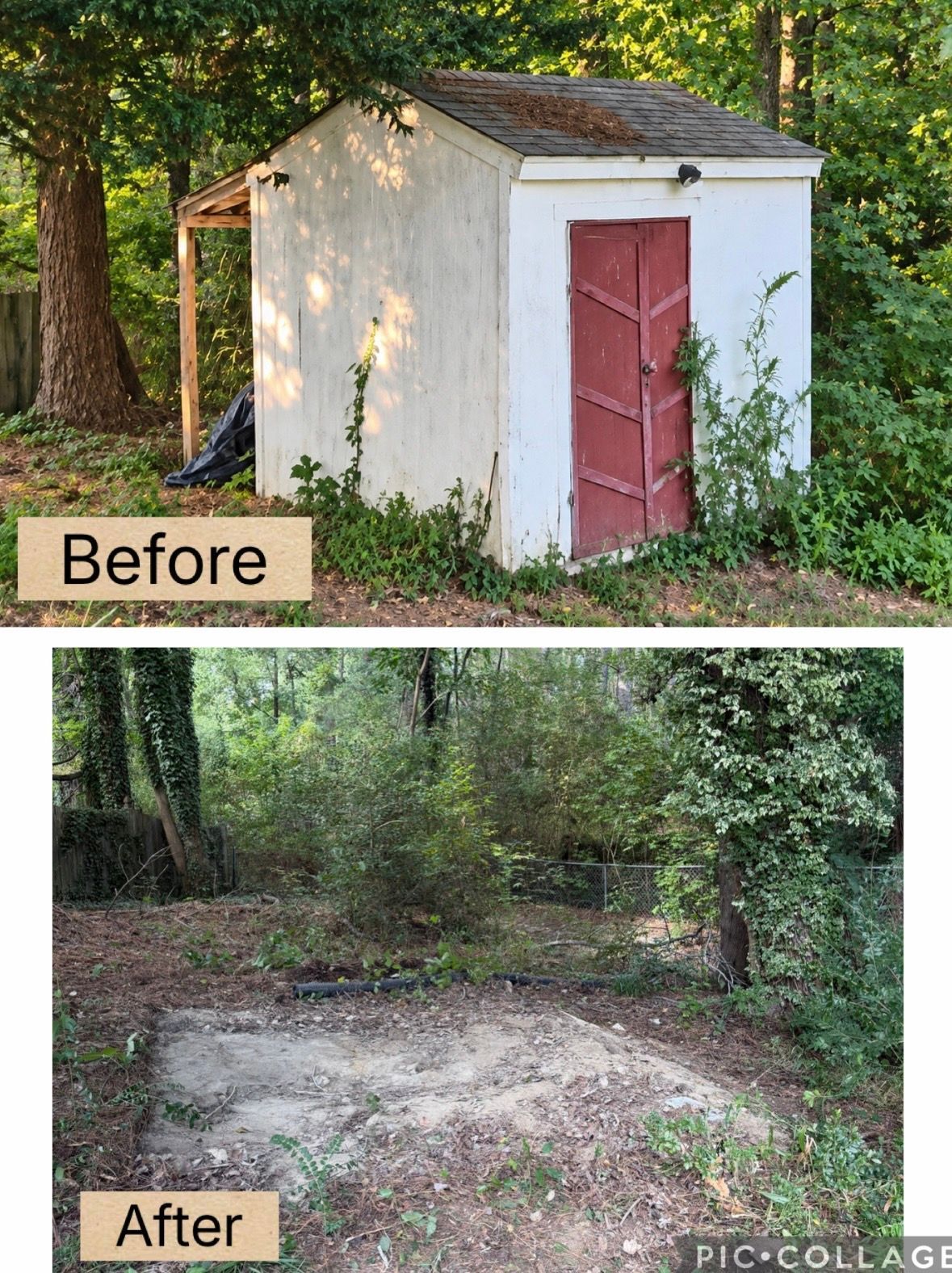
After the job, the space where the shed stood is visibly and functionally clear. No lumber remains in the grass, no nails or screws are left scattered across the area, and no concrete block or broken panel material is stacked for the property owner to deal with later. That outcome—zero leftover debris—is what makes the cleared footprint immediately usable for lawn maintenance, a new structure, or open yard space.
The service includes all above-grade shed components. Concrete slabs or poured pads that formed the shed's foundation are assessed separately; whether they are removed depends on the property owner's plans for the cleared area and whether the slab's condition and thickness make removal practical in the same visit. The owner clarifies slab handling during the initial assessment so there are no surprises about what leaves the property.
What Property Owners Ask About the Work
Property owners considering shed removal in Fredericksburg frequently ask about what the process covers, how mixed-material structures are handled, and what the cleared space looks like when the job is finished.
How is a shed with mixed construction—wood framing and metal roofing or concrete block walls—demolished compared to an all-wood structure?
Mixed-material sheds require the teardown sequence to account for how different components transfer load and how they behave when adjacent sections are removed. Metal roofing and concrete block are separated from wood framing during loading rather than mixed into a single pile, because disposal requirements differ by material type.
What does the property look like after a complete shed demolition and debris removal?
The cleared area contains no lumber, fasteners, roofing material, or hardware. The ground at the former shed's footprint is accessible without a secondary cleanup step, which matters for properties where the cleared space will be graded or seeded immediately after removal.
How does the owner assess a structurally compromised shed before starting demolition?
The owner inspects framing connections, wall panel condition, and roof integrity before any component is removed. This assessment determines the teardown sequence and identifies any members that may shift unexpectedly when adjacent sections are destabilized.
Why do older sheds on rural Fredericksburg properties often have foundation issues that affect how they are demolished?
Sheds built directly on grade or on shallow poured pads without frost-depth footings shift over time as the ground beneath them moves. That shifting stresses wall framing and roof connections in ways that make the structure less predictable during teardown than a shed that has remained plumb and level.
When is a concrete slab under a shed included in the demolition scope versus handled as a separate job?
Slab removal depends on thickness, reinforcement, and what the property owner plans for the cleared area. The owner reviews those conditions during the pre-job walkthrough and specifies exactly what the demolition scope covers before any work begins.
Anderson Removal LLC also handles shed demolition in Stafford, Chancellor, Thornburg, Falmouth, and Hartwood. To set up a walkthrough and confirm the full scope of the job in Fredericksburg, call (540) 300-7330.