Disposal That Keeps Hazardous Items Out of Landfills
Hazardous waste removal in Fredericksburg for properties holding paint, solvents, batteries, or refrigerant that standard trash service will not accept
Older homes in Fredericksburg accumulate materials that most people do not realize require specialized disposal—cans of leftover oil-based paint from a 1980s renovation, corroded batteries stored in a garage, refrigerant-containing appliances that predate current disposal requirements, and containers of solvents that were common in mid-century households. Anderson Removal LLC handles the logistics of removing those materials from your property and routing them through compliant disposal channels so they do not end up in a standard landfill. This service is built for homeowners and rural property owners in the Fredericksburg area who have identified hazardous household items and need a direct path to legal, responsible disposal.
The process begins with you identifying what materials are present on your property. Anderson Removal LLC does not test or verify the nature of materials on-site—identification is your responsibility as the property owner. Once you know what you have, the owner arranges pickup and handles all disposal logistics through channels that comply with environmental regulations, keeping those items out of the municipal waste stream where they would otherwise cause harm.
Schedule a removal appointment to discuss the specific hazardous materials on your property and confirm the appropriate disposal path.
How Compliant Disposal Works for Household Hazardous Materials
Household hazardous waste covers a broader category than most property owners expect. Common items include oil-based paints and stains, aerosol cans, fluorescent bulbs, rechargeable batteries, pool chemicals, pesticides, and appliances containing refrigerant. These materials share a common problem: when placed in a standard dumpster or left at the curb, they contaminate municipal waste streams or release compounds that cannot be safely processed at ordinary landfills. Proper disposal means routing each item type to a licensed facility equipped to handle it—something that requires knowing the correct facility and coordinating the transport.
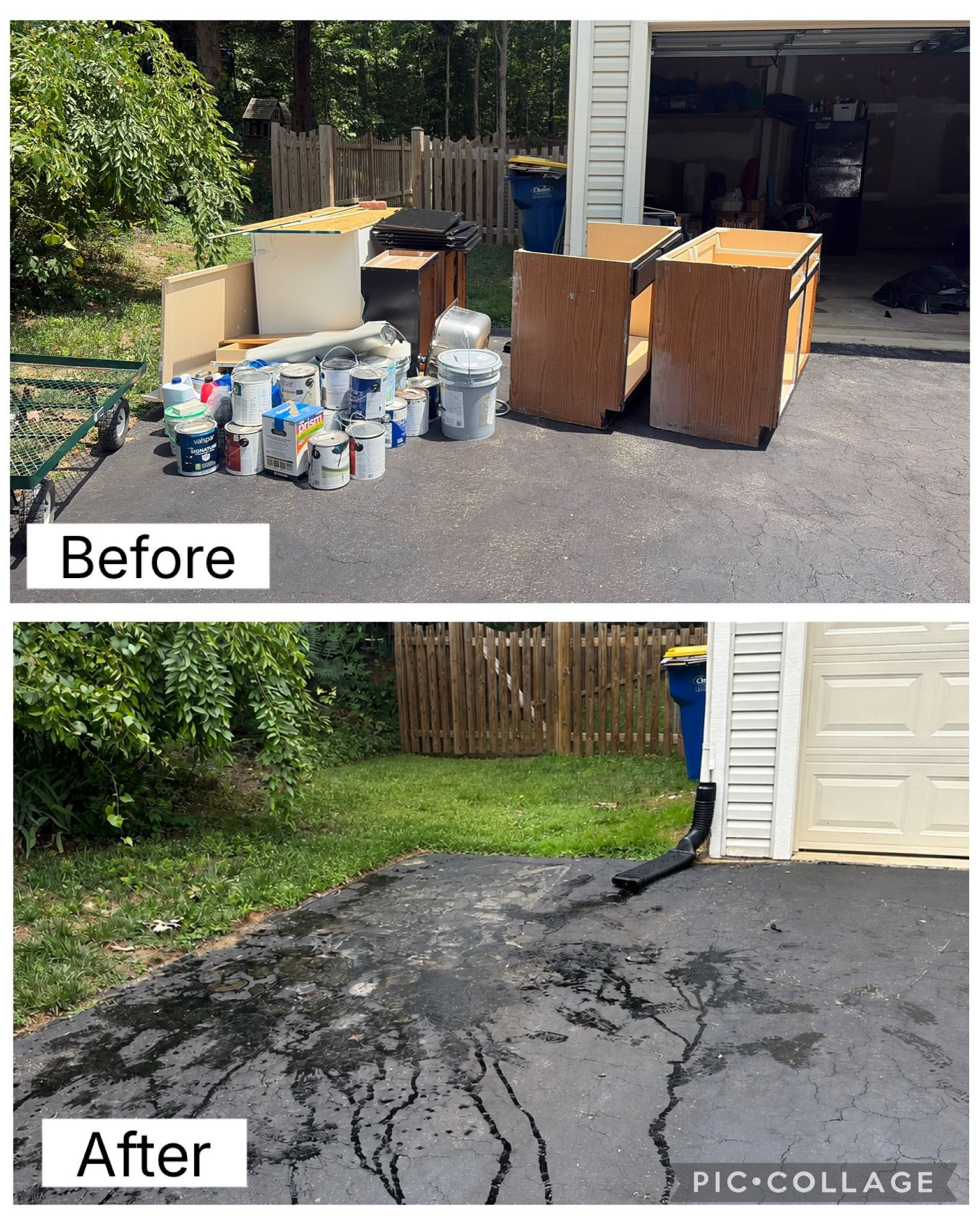
After removal is complete, the materials are gone from your property and documented through a disposal chain that does not include a standard landfill. What you will notice is straightforward: the garage shelf that held deteriorating paint cans is clear, the outbuilding storing old solvents is emptied, and there is no lingering question about whether those items were handled correctly. Properties in areas like Chancellor and Hartwood, where older construction and rural land use mean storage of legacy materials is common, often require more than a single material category removed at once.
The service covers removal and transport to licensed disposal facilities. It does not include material testing, professional identification of unknown substances, or remediation of surfaces that have been contaminated—those situations require a different category of environmental contractor. What Anderson Removal LLC handles is the removal and compliant disposal of hazardous household items that you have already identified and need gone.
Common Questions About Hazardous Waste Removal
Property owners in Fredericksburg often have specific questions about what the removal process covers and how to prepare before the work begins.
What counts as hazardous household waste that requires special disposal?
Materials such as oil-based paints, stains, varnishes, pesticides, pool chemicals, fluorescent bulbs, rechargeable and lithium batteries, aerosol cans with remaining contents, and appliances containing refrigerant all fall outside what standard trash service will accept. If a product label includes warning language about flammability, toxicity, corrosiveness, or reactivity, it typically qualifies for specialized disposal rather than curbside pickup.
How should you prepare hazardous materials before removal?
Keep materials in their original containers whenever possible, since the labeling helps confirm what is being handled. Do not mix different chemicals into a single container, as combining incompatible substances creates additional hazards during transport. Gather all items in one accessible area of the property if you are able to do so safely.
What happens to hazardous materials after they are removed from your property?
Materials are transported to licensed disposal facilities equipped to process each category correctly, rather than entering the standard municipal waste stream. The disposal path complies with environmental regulations, so items are not landfilled through ordinary channels.
Why can't old paint and solvents go in a standard dumpster or trash bin?
Standard landfills are not permitted to accept materials classified as hazardous because the compounds in those products can leach into soil or groundwater, or create safety hazards during compaction and transport. Many Fredericksburg-area homes built before the 1990s contain paint and finishing products that use formulations no longer sold precisely because of those risks.
How does the removal process differ when a property has multiple types of hazardous materials?
Each material category may route to a different licensed facility, so the owner coordinates the disposal logistics across categories rather than treating everything as a single load. You do not need to sort or separate the materials yourself beyond keeping them in their original containers; the disposal routing is handled on the back end.
Anderson Removal LLC also handles hazardous waste removal in Stafford, Chancellor, Thornburg, Falmouth, and Hartwood. If your property contains materials you have identified and need removed through compliant channels, contact Anderson Removal LLC directly at (540) 300-7330 to arrange pickup.