
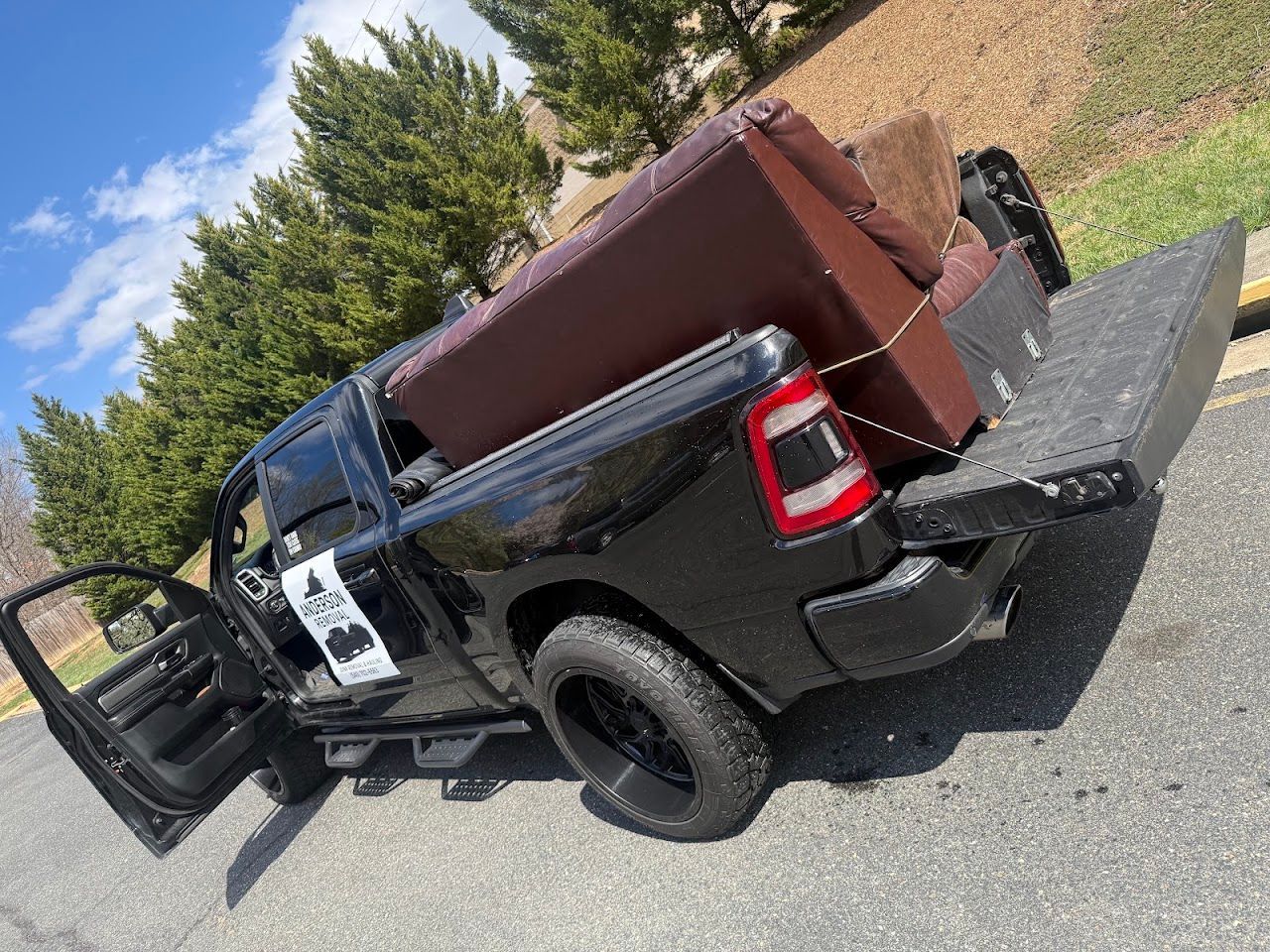
Heavy Furniture Removed Without Damaging Walls or Floors
Furniture removal in Fredericksburg for bulky or heavy pieces that cannot be moved without risk to stairwells, doorframes, and flooring
Maneuvering a full-size sofa through a narrow hallway or carrying a solid wood dresser down a tight staircase without marking the walls is the kind of task that goes wrong quickly when the people doing it are working without the right approach. Anderson Removal LLC provides furniture removal in Fredericksburg as an owner-operated service, loading heavy and bulky pieces directly onto the truck while protecting the walls, stairwells, and flooring throughout the process. This matters most in established neighborhoods where the homes were built with tighter interior dimensions than what has become standard in newer construction, and where a scuffed stairwell or gouged doorframe is not a trivial repair.
The process is a single visit. The owner loads all items—whether that is one piece or an entire room's worth of furniture—directly onto the truck, and everything is hauled away the same day. Items are disposed of responsibly, and pieces that are still in usable condition are directed toward salvage or reuse rather than the landfill when that is possible. No return trips are scheduled; the intent is to leave the space clear in one appointment.
Request a removal appointment to confirm what pieces need to go and schedule a time that works for your property access.
The Difference Between Careful Removal and Simply Getting It Out
The physical challenge of furniture removal is not the weight alone—it is the combination of weight, awkward dimensions, and confined spaces. A large sectional that assembled easily in a living room does not disassemble in the same straightforward way, and forcing it through a tight turn damages the wall corner every time. The standard approach that separates careful removal from a rushed job is assessing the path before moving the piece: measuring the widest point of the furniture against the narrowest point in the route, and deciding whether a piece needs to be tilted, angled, or partially disassembled before it can safely clear the doorframe. In neighborhoods like Thornburg and Chancellor, where older homes were built with hallway widths that predate modern furniture scale, that assessment step is not optional.
After removal is complete, what you will notice is the absence of damage as much as the absence of the furniture itself—no scrape marks along the stairwell wall, no gouged baseboard from a corner that did not quite clear. The room is empty and ready for whatever comes next: a renovation, a new layout, or the next occupant. Anderson Removal LLC keeps all communication direct with the property owner, so there is no relay through a dispatcher when you need to confirm details about access or what is being removed.
The service covers all furniture types—upholstered pieces, wood frames, mattresses, appliances used as furniture such as standalone units, and other bulky household items. It does not include moving furniture to a new location within the property or disassembly of built-in cabinetry, which is a separate scope of work from removal and hauling.
Answers About How Furniture Removal Works
Homeowners in Fredericksburg regularly ask practical questions about what to expect during furniture removal, particularly when older homes present access challenges that newer construction does not.
How is furniture moved through tight stairwells and doorframes without marking the walls?
The approach starts with measuring the critical dimensions of the piece against the route before attempting to move it. Furniture blankets or padding protect wall corners during the actual move, and awkward pieces are tilted to their narrowest profile before entering a confined space. The decision to partially disassemble a piece—removing legs or detaching modular sections—is made based on what the route actually allows, not by default.
What happens to furniture after it is removed from the property?
Items are hauled to disposal facilities, but pieces still in usable condition are directed toward salvage or donation pathways where possible, keeping functional furniture out of the landfill. Items that cannot be reused are disposed of at licensed facilities rather than unauthorized sites.
Why does removing a single large piece sometimes require as much preparation as clearing an entire room?
A single oversized piece—a king-size sleigh bed frame, a sectional with a fixed configuration, or a solid wood armoire—requires route planning and possibly partial disassembly before it can move safely. Multiple smaller pieces often clear standard doorframes without those steps, making a full room faster per item than one complicated single piece.
When does furniture removal require more than one person to do safely?
Any piece that exceeds safe single-person lifting weight or that cannot be controlled through a stairwell turn by one person working alone requires a two-person approach. Attempting to muscle oversized pieces solo through tight turns is where most wall and floor damage occurs.
What should you do to prepare a Fredericksburg home for furniture removal?
Clear a path from the piece to the exit point before the appointment. Remove any items on or around the furniture that could shift during the move. If there are access constraints specific to your property—a gate that needs to be unlocked, limited driveway space for the truck—note those when scheduling so the owner arrives prepared.
Anderson Removal LLC also handles furniture removal in Stafford, Chancellor, Thornburg, Falmouth, and Hartwood. To schedule a removal and confirm access details for your property, call Anderson Removal LLC directly at (540) 300-7330.